

The Price on the Sign Isn’t the Price You Pay: Hidden Costs to Check Before Renting Self Storage in Edmonton
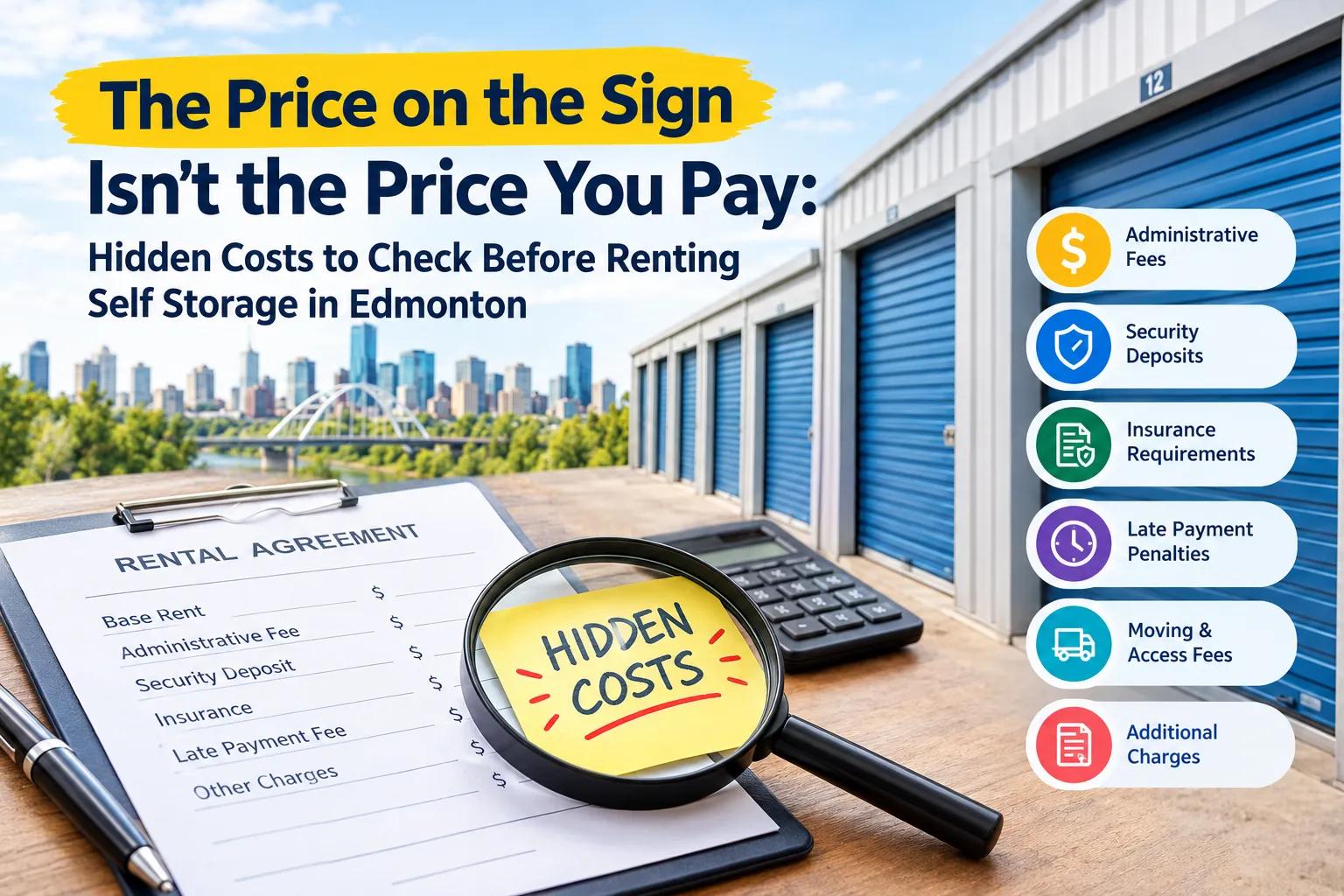
A cheap monthly rate is the easiest thing to advertise and the least reliable number in the whole transaction. Anyone who has rented a unit knows the quote on the phone and the first invoice can look like two different documents.
That doesn’t mean storage facilities are out to trick anyone. Most of the extra charges are disclosed somewhere, just not on the banner. If you’re comparing self storage in Edmonton, the goal is to find those charges before you pay a deposit, not after.
Here is where the money tends to leak out, roughly in the order you’ll run into it.
The promotional rate is a starting point
“First month free” and “50% off for three months” offers are common, and they are fair marketing. The catch is what happens on month four.
Ask for the standard rate, meaning what the same unit costs without any promotion. Then ask how often the facility reviews rates for existing tenants and how much notice they give. Some operators raise rents on current customers once a year; others hold steady. The answer tells you what your budget looks like in a year, not just this spring.
A quick sanity check: multiply the standard rate by the number of months you realistically expect to store. Compare that total across facilities, not the headline figure.
One-time charges that arrive on day one
Before you’ve carried a single box in, a few small items can stack up:
Administration or setup fee. Some facilities charge one; some fold it into the rent.
Security deposit. Usually refundable, but confirm the conditions for getting it back.
Lock. Many facilities require a specific type of lock, sold on-site. Others let you bring your own. A cylinder lock you already own may or may not be accepted.
Mandatory insurance enrolment. More on this below.
None of these is outrageous on its own. Together they can add a noticeable amount to the first invoice, and it’s worth knowing the figure before you commit.
Tax, because the quote may not include it
Alberta has no provincial sales tax, but GST applies, so a rate quoted without tax will rise by 5% on your statement. This is a small point, but when you’re comparing two quotes, make sure both include or exclude tax. A mismatch can make one facility look cheaper than it is.
Insurance: the line item people skim past
Your landlord’s policy does not cover your stored belongings, and in most cases neither does the facility’s. What happens next varies:
Some facilities require you to carry coverage and sell you a plan.
Some accept proof of coverage from your own home or tenant insurance.
Some leave it entirely up to you.
Before you pay for a facility’s plan, call your home or tenant insurer and ask whether items in off-site storage are covered, and up to what limit. Many policies include some off-premises coverage; others cap it low or exclude certain items. Then read the facility’s plan for exclusions. Artwork, electronics, collectibles and documents are common sticking points.
Skipping this step means you either pay twice or discover a gap at the worst possible time.
Climate control: a real cost, and sometimes a real need
Edmonton winters are a genuine storage consideration. Prolonged deep cold, then a warm spell, can be hard on certain things: wooden furniture, musical instruments, leather, electronics, paintings, appliances with water lines, and anything with adhesive or glue.
Climate-controlled units generally cost more than standard ones, and for a lot of households that premium is justified. For others, such as a few plastic bins of kitchenware or tires, it isn’t. Work out what you’re actually storing before choosing a tier. Paying for climate control you don’t need is a hidden cost of its own; so is a damaged couch you could have protected.
Also ask what “climate controlled” means at that facility. Is it temperature-regulated, humidity-managed, or just heated to stay above freezing? The terms aren’t standardized.
Paying for space you don’t use
Oversizing is probably the most common reason people overspend. A unit that’s a size too big can cost far more over a year than the stress of measuring ever would.
Practical habits that help:
Inventory your items first, and note the tall or awkward ones.
Ask staff how they’d pack your list; good facilities will talk it through.
Check whether you can switch sizes mid-tenancy, and whether doing so triggers fees.
Think vertically. Many units have generous ceiling height that goes unused.
If you’re unsure, ask whether the facility offers a size guide or lets you view an example unit.
Access hours and the cost of inconvenience
Not every charge appears on an invoice. A facility with limited gate hours, or a long drive from your home or workplace, costs you in time and fuel, especially if you plan to visit often. If you’re using the unit for business inventory, seasonal gear you swap regularly, or tools for a trade, frequent access matters more than a slightly lower rate.
In Edmonton, where distances are real and winter driving can slow everything down, a location convenient to your commute may be worth a few extra dollars a month. Ask whether 24-hour access is included or an add-on, and whether after-hours visits carry any restrictions.
Late fees, auction clauses and what happens if you fall behind
Read this section of the agreement even if you never expect to need it. Look for:
How many days past due before a late fee applies, and what the fee is.
Whether the facility can restrict your access, and when.
At what point your goods may be sold or disposed of, and what notice is required.
Whether autopay is mandatory, and what happens if a card expires.
Life interrupts. A missed email about a declined card shouldn’t put a family’s belongings at risk. Ask how the facility contacts tenants and whether they use more than one method.
Moving out: notice periods and final bills
Ending a rental can cost more than expected if you miss the paperwork. Find out:
How much notice is required, and whether it must be written.
Whether you’re billed for a full month if you leave mid-cycle.
Whether there’s a cleaning or inspection charge on exit.
When your deposit is returned, and how.
Setting a calendar reminder for the notice date is a simple way to avoid paying for an extra month of empty space.
Truck rentals, packing supplies and other add-ons
Many facilities sell boxes, tape and moving blankets, and some offer truck rental. Convenience has a price, and basic supplies are often cheaper elsewhere. If you need a truck, compare it against hiring movers or borrowing a vehicle. Don’t let a bundle appear cheap just because it’s a single line.
A short list to take with you
When you call or visit any facility offering self storage in Edmonton, these questions get you most of the way to a true cost:
What is the standard rate after promotions end?
What one-time fees apply at move-in?
Is GST included in the quote?
Is insurance required, and can I use my own?
How is climate control defined here?
How often are existing-tenant rates reviewed?
What are the late-payment and access-restriction rules?
What notice do you need when I leave?
Write the answers down. If a facility is reluctant to give straight answers, that tells you something too.
The bottom line
The cheapest-looking unit and the least expensive unit are rarely the same one. A transparent facility will walk you through every charge without being asked twice. Spend an extra twenty minutes comparing totals, not teasers, and you’ll protect both your belongings and your budget.